The best time to visit Varanasi, month by month
· 7 min read
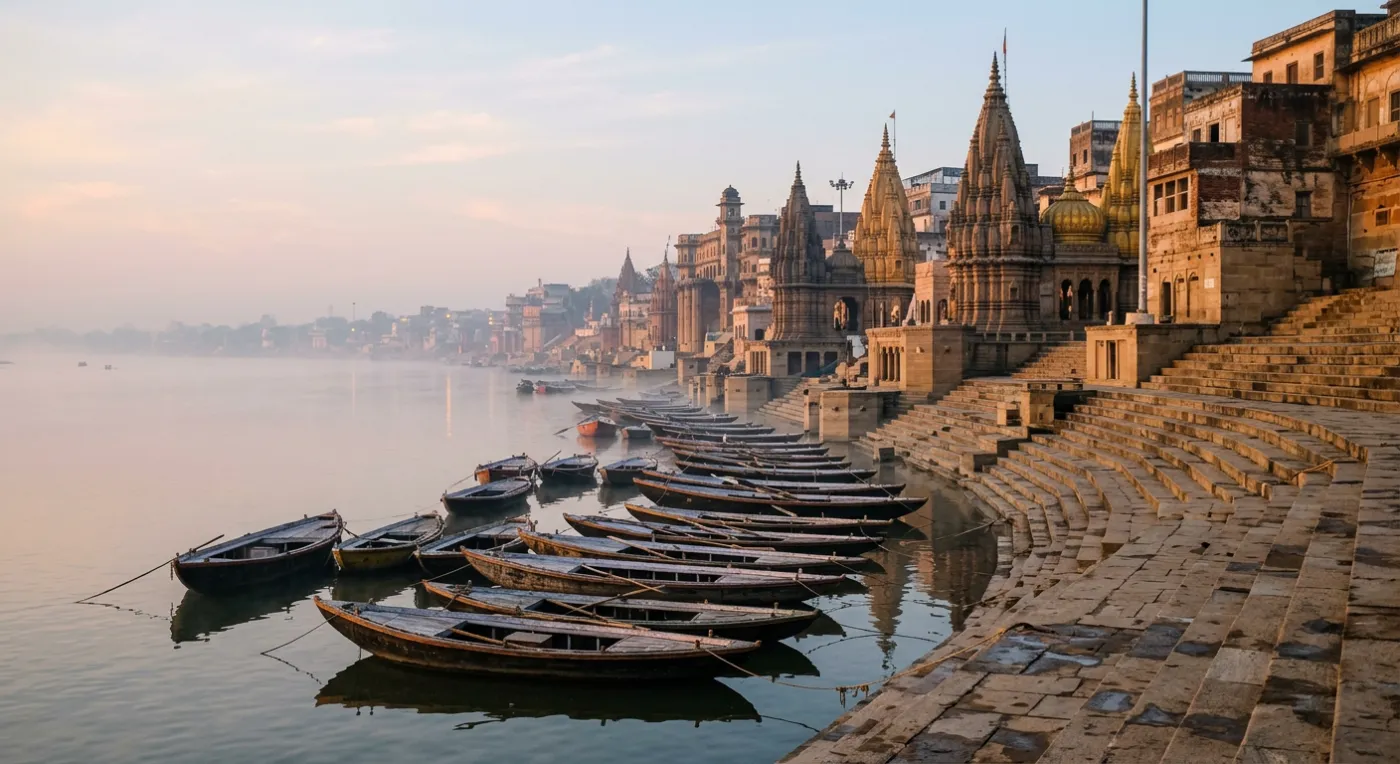
Varanasi is a year-round city in the sense that it never closes, and a seasonal one in the sense that the same ghat is a different experience in January and June. Here is what each window actually offers.
October to March — the answer for most people
Daytime temperatures between 10°C and 27°C, clear light for photography, and stone steps you can sit on comfortably at dawn. This is the window every operator recommends, and it is genuinely right.
The trade is crowds. November and December carry Dev Deepawali and the wedding season together, and accommodation on the ghat side prices accordingly. January can bring dense morning fog that delays flights and occasionally cancels the sunrise boat.
The specific dates worth planning around
| Occasion | When | What it means |
|---|---|---|
| Dev Deepawali | 24 November 2026 | The whole ghat front lit. Book vehicles 6–8 weeks out |
| Wedding season | November–February | Large vehicles commit early; city traffic heavier |
| Magh Mela, Prayagraj | January–February | 125 km away, affects regional accommodation |
| Mahashivratri | February or March | The single heaviest day at Kashi Vishwanath |
| Holi | March | Vivid, chaotic, and not for everyone |
April to June — the difficult window
45°C is common in May and June, and the stone of the ghats holds the heat well past sunset. Midday sightseeing is genuinely unpleasant and, for older travellers, unwise. If these are your only dates, the day compresses to 05:30–10:00 and 17:00–21:00, with the middle spent indoors — which works, but it is half a day of sightseeing rather than a full one.
If you are travelling in May or June with elders, build the itinerary around two short outings a day and book a hotel you are happy to sit in for five hours. That is the honest plan rather than a heroic one.
July to September — the monsoon
The city is at its greenest and its emptiest, and the light after rain is extraordinary. Against that: the Ganga rises, the lower ghat steps go under water, and boat operations are restricted or suspended when the current is strong. Some years the aarti platform itself moves higher up the steps.
Monsoon is the right choice if you want Varanasi without crowds and are relaxed about the boat being cancelled. It is the wrong choice if the sunrise row is the reason you are coming.
A month-by-month summary
| Months | Weather | Crowds | Verdict |
|---|---|---|---|
| Oct–Nov | 20–30°C, clear | High, peaks at Dev Deepawali | Best overall, book early |
| Dec–Jan | 10–22°C, some fog | High | Excellent, carry warm layers |
| Feb–Mar | 15–30°C | Moderate to high | Very good; Mahashivratri and Holi are intense |
| Apr–Jun | 30–45°C | Low | Difficult. Early mornings and evenings only |
| Jul–Sep | 25–35°C, humid | Lowest | Green and empty; boats unreliable |
Common questions
- What is the best month to visit Varanasi?
- November for the atmosphere, especially around Dev Deepawali on 24 November 2026, or February for the best balance of comfortable weather and manageable crowds. October to March is the broadly right window.
- Is Varanasi too hot in summer?
- May and June regularly reach 45°C and the ghat stone holds heat past sunset. It is doable with an itinerary built around 05:30–10:00 and 17:00–21:00, but midday sightseeing is genuinely unwise, particularly for older travellers.
- Can you take a boat during the monsoon?
- Sometimes. The Ganga rises, the lower steps flood and boat operations are restricted or suspended when the current is strong. If the sunrise boat is the reason for your trip, avoid July to September.
Ready to book a van?
Send your dates and any darshan slot you hold — we build the driver’s day around it.