What to wear and what to expect inside Varanasi's temples
· 6 min read
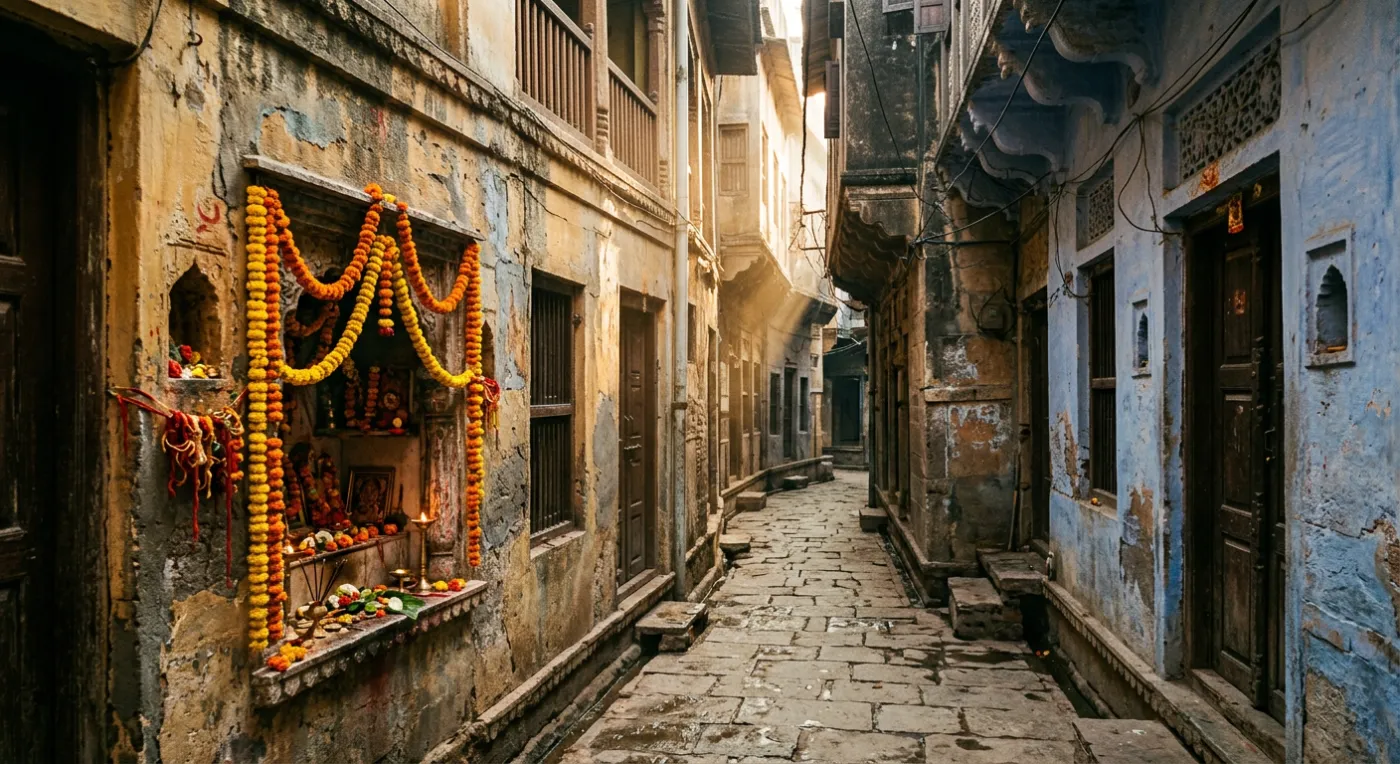
Varanasi is more relaxed with visitors than its reputation suggests. Almost nothing here is an enforced rule; most of it is ordinary courtesy that happens to be unfamiliar. The exceptions — phones, leather, lockers — are enforced, and worth knowing before you are at the gate.
What to wear
- Shoulders and knees covered, for everyone. A kurta or a long-sleeved shirt with full-length trousers is entirely sufficient.
- Nothing you mind removing. Shoes come off at every temple and at many shrines in the lanes.
- Slip-on footwear rather than laces. You will take it off and put it back on five or six times in a day.
- A scarf or dupatta is useful — for covering the head where it is customary, and for the sun.
- Modest does not mean traditional. Western clothing that covers shoulders and knees is fine and extremely common.
The rules that are actually enforced
At Kashi Vishwanath, phones, cameras, leather items and bags are not permitted inside. Free lockers are available at the entry points, and locker use is included with a Sugam Darshan ticket. Security checks are thorough, and the queue for them is separate from the darshan queue itself.
Leather means belts and wallets too, not just shoes. The easiest approach is to leave everything except your ticket and ID in the vehicle, and carry nothing into the gali at all.
Offerings, and what they cost
Flowers, sweets and a small brass pot of Ganga water are sold throughout the lanes approaching every temple. None of it is required. Prices are negotiable and rise sharply for visitors who look uncertain — agree the number before it is handed to you rather than after.
Inside, with a Sugam Darshan ticket, the Shastri's dakshina is already covered by the ticket price. If someone inside asks for more, that is outside the arrangement and you are entitled to decline politely.
At the ghats
- Cremations happen in the open at Manikarnika and Harishchandra. Photography there is intrusive and widely resented — put the camera away.
- During the evening aarti, sitting on the steps is normal and standing in front of seated people is not.
- Boatmen will offer floating diyas. A small purchase is part of the evening; there is no obligation.
- The steps are uneven, sometimes wet, and poorly lit at the edges after dark.
What nobody expects of you
You are not expected to know the rituals, to participate, or to be Hindu. Standing quietly at the back of an aarti is a completely normal thing for a visitor to do, and nobody will think anything of it. The courtesy that matters is attention rather than performance.
Common questions
- What should I wear to Kashi Vishwanath temple?
- Shoulders and knees covered, and footwear you can slip off easily — shoes come off at every temple. Western clothing that covers shoulders and knees is entirely acceptable and very common.
- Are phones allowed inside Kashi Vishwanath?
- No. Phones, cameras, leather items and bags are not permitted inside. Free lockers are available at the entry points, and locker use is included with a Sugam Darshan ticket.
- Is photography allowed at the Varanasi ghats?
- Generally yes, with one firm exception: the cremation ghats at Manikarnika and Harishchandra, where photography is intrusive and widely resented. Put the camera away there.
Ready to book a van?
Send your dates and any darshan slot you hold — we build the driver’s day around it.